
How to Deep Clean a Washing Machine in Singapore: A Step-by-Step Guide
Musty towels, dull-looking school uniforms and laundry that never quite smells fresh can all be signs that your washing machine needs cleaning. Detergent residue, fabric softener, lint, moisture and other buildup can accumulate inside the drum, rubber gasket, detergent dispenser and filter over time.
A normal wash cycle is designed to clean clothes, not necessarily every part of the appliance itself. That is why a washing machine can look clean from the outside while still developing residue or mould in less accessible areas.
Singapore's warm and humid environment can make moisture management more challenging. Washing machines are often installed in compact service yards, kitchens or utility areas where airflow is limited, allowing damp areas inside the machine to remain wet between washes.
This guide explains why washing-machine buildup occurs, the signs that your machine needs attention, how to clean the accessible areas yourself, which cleaning products to use with caution, how often to clean the machine, and when professional washing-machine deep cleaning is more appropriate.
Quick Answer: How Often Should You Deep Clean a Washing Machine in Singapore?

Most households should carry out routine washing-machine cleaning regularly and consider a professional deep clean every six to twelve months. Homes with heavy daily laundry loads, babies, pets or front-load machines in poorly ventilated areas may benefit from professional cleaning closer to every six months.
For DIY cleaning, always start with the manufacturer's instructions. Many washing machines have a dedicated Tub Clean or Drum Clean programme, and some manufacturers specify particular cleaning products or advise against certain household substances.
The rubber gasket, detergent dispenser and accessible drain or lint filter are among the areas that should receive regular attention.
If persistent smells, mould, black flakes or drainage problems remain after routine cleaning, professional inspection or deep cleaning may be appropriate.
Washing Machine Deep Cleaning in Singapore at a Glance
Question | Quick Answer |
How often should I clean my washing machine? | Carry out routine maintenance regularly and follow the manufacturer's cleaning schedule |
How often should it be professionally deep cleaned? | Around every 6–12 months for many households |
What areas need regular cleaning? | Drum, gasket, detergent dispenser and accessible filters |
Why does Singapore's climate matter? | Warm, humid conditions can make it harder for damp areas to dry completely |
Can I deep clean the machine myself? | Yes, for accessible areas and manufacturer-approved cleaning cycles |
Should I use vinegar or baking soda? | Only if compatible with your manufacturer's instructions |
When should I call a professional? | Persistent odours, mould, residue, drainage problems or inaccessible buildup |
Are front-load and top-load machines cleaned differently? | Yes, because they collect moisture and residue in different areas |
Why Does Washing Machine Buildup Happen in Singapore?
Washing-machine buildup is usually caused by a combination of moisture, detergent residue, fabric fibres, dirt and limited ventilation.
Singapore's humid conditions can make drying more difficult, particularly when a washing machine is located in a compact service yard, kitchen corner or utility area. Leaving the machine closed immediately after a wash can also trap moisture inside.
Modern washing machines are designed to use water efficiently. However, using more detergent or fabric softener than recommended can leave additional residue behind, particularly when the machine is repeatedly used without adequate drying and maintenance.
Where Does the Buildup Collect?
Different parts of the washing machine collect different types of residue.
The rubber gasket on a front-load machine can trap water, lint and detergent residue inside its folds.
The detergent dispenser can collect dried detergent and fabric softener, particularly around the corners and internal channels.
The drain or lint filter can collect hair, lint, coins, tissues and other small objects that enter the washing machine through clothing pockets.
The drum and surrounding areas can accumulate detergent film and other residue over time.
On some top-load machines, buildup can also collect around the agitator, tub rim and areas that are difficult to access without partial disassembly.
What Are the Signs Your Washing Machine Needs Cleaning?
The most common signs include persistent musty smells, visible residue or mould, black or grey flakes appearing on laundry, detergent buildup and recurring residue around the gasket or dispenser.
However, not every unusual symptom is a cleaning problem. A persistent grinding noise, repeated error code or serious drainage failure may indicate a mechanical issue that requires repair rather than cleaning alone.
Musty or Sour-Smelling Laundry
If towels, clothes or bedsheets smell damp or sour immediately after washing, check the washing machine itself.
Odours can develop when moisture and residue remain trapped inside the gasket, detergent dispenser, drum or drainage system.
Start by checking these accessible areas and following the manufacturer's recommended cleaning programme.
Visible Mould or Dark Residue
Black, grey or other coloured spots around the rubber gasket, detergent drawer or other damp areas indicate that the machine requires cleaning.
Front-load machines are particularly likely to show visible buildup around the door gasket because water and residue can remain trapped in its folds.
White Residue or Dull Laundry
White streaks on dark clothes, stiff towels or laundry that does not feel properly rinsed can indicate excessive detergent use or residue buildup.
Before assuming that the washing machine is faulty, check whether you are using more detergent than recommended and whether the dispenser needs cleaning.
Slow Draining or Standing Water
Water remaining inside the drum after a completed cycle can be caused by a blocked filter, drainage hose or pump.
Check the accessible filter and external drain according to the manufacturer's instructions. If the machine continues to drain slowly, professional diagnosis may be needed.
Unusual Rattling or Grinding
Not every unusual noise indicates that the washing machine needs deep cleaning.
A rattling sound can sometimes be caused by a coin, button or other small object. Persistent grinding, rumbling or severe vibration, however, may indicate a mechanical problem such as worn bearings or suspension components.
If cleaning the accessible areas does not resolve the noise, treat it as a potential repair issue rather than repeatedly deep cleaning the machine.
What Do You Need to Clean a Washing Machine?
For routine home cleaning, you may need a soft cloth or microfibre cloth, a soft-bristled brush, an old toothbrush, a small basin for removable components and a suitable washing-machine cleaning product.
The most important item is actually the manufacturer's cleaning guidance.
Before using vinegar, baking soda, bleach or another household cleaning product, check your washing machine's manual. Different manufacturers and models may have different recommendations for drum-cleaning products and procedures.
If your machine has a dedicated Tub Clean or Drum Clean programme, use it according to the manufacturer's instructions.
How Do You Deep Clean a Washing Machine Step by Step?
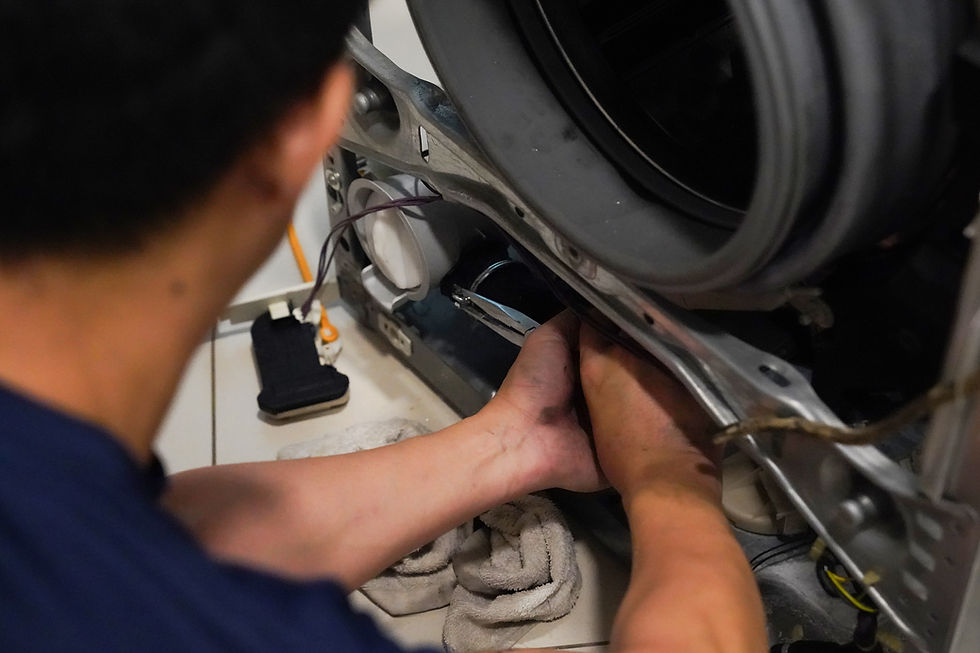
The following process focuses on accessible maintenance areas. The exact procedure should always be adapted to your washing machine manufacturer's instructions.
Step 1: Prepare the Machine
Remove all laundry from the drum.
Switch the machine off before cleaning accessible components, particularly when you need to handle a filter, remove the detergent drawer or work around areas where water may be present.
Keep your cleaning supplies nearby and make sure you have enough space to work safely around the appliance.
Step 2: Clean the Rubber Gasket
For front-load machines, gently inspect the rubber gasket and its folds.
Remove visible lint, hair and residue with a soft cloth. Wipe away standing moisture and clean the gasket using a product approved for your machine.
Pay particular attention to the bottom section of the gasket, where water can remain trapped.
Do not use abrasive tools that could damage the rubber.
Step 3: Clean the Detergent Dispenser
Remove the detergent drawer according to the manufacturer's instructions.
Rinse away dried detergent and fabric softener, then use a soft brush or toothbrush to clean the corners and internal channels.
The cavity behind the drawer should also be wiped because residue can accumulate there.
Allow the drawer to dry before replacing it.
Step 4: Run the Manufacturer's Cleaning Programme
If your washing machine has a Tub Clean, Drum Clean or similar programme, run it according to the manufacturer's instructions.
Use the recommended cleaning product and quantity specified for your machine.
Some households use vinegar or baking soda as home-cleaning alternatives, but these should not be treated as universally suitable for every washing machine. If the manufacturer does not recommend them, use the manufacturer's approved cleaning product instead.
Never mix different cleaning chemicals.
Step 5: Clean the Accessible Filter
Follow the manufacturer's instructions for locating and removing the drain or lint filter.
For front-load machines, the drain filter is commonly located behind an access panel near the lower front of the appliance.
Place a towel or suitable container underneath before opening the filter because residual water may escape.
Remove visible lint, hair, coins and other debris, rinse the filter and reinstall it securely.
Some top-load machines use a lint filter located inside the drum or around the agitator. The exact design varies by model.
Step 6: Wipe the Drum and Exterior
After completing the cleaning programme, wipe accessible areas of the drum with a clean cloth.
For top-load machines, pay attention to the agitator, tub rim and other accessible areas where lint or residue may accumulate.
Avoid steel wool, wire brushes and abrasive cleaning products because they can damage surfaces.
Finish by wiping the door, lid and exterior with a slightly damp microfibre cloth.
Step 7: Allow the Machine to Dry
When cleaning is complete, leave the door or lid open where the machine design allows it.
Leave the detergent drawer slightly open as well.
Allowing air to circulate through the machine helps reduce the amount of moisture remaining between washes.
How Is Cleaning a Top-Load Machine Different From a Front-Load Machine?
Front-load and top-load machines require different cleaning attention because their designs create different areas where moisture and residue can collect.
Front-Load Washing Machines
The rubber door gasket is one of the most important areas to maintain because its folds can trap water, lint and detergent residue.
The detergent drawer and drain filter should also be checked regularly.
If buildup remains underneath the gasket, inside inaccessible drainage components or around the drum despite routine cleaning, professional deep cleaning may be more appropriate.
Top-Load Washing Machines
Top-load machines do not have the same front-door gasket, but residue can still accumulate around the agitator, tub rim, detergent dispenser and drainage areas.
Some buildup between the inner and outer tubs cannot be reached through normal household cleaning. Accessing these areas may require partial disassembly by a trained technician.
Which Cleaning Products Should You Avoid?
The safest approach is to follow your washing machine manufacturer's cleaning instructions rather than assuming that a household cleaning product is suitable.
Never mix bleach with vinegar or another acidic cleaner. The combination can produce harmful chlorine gas.
Avoid abrasive powders, steel wool and aggressive tools that can scratch the drum, damage plastic components or affect rubber seals.
Do not use excessive quantities of detergent or cleaning products simply because you believe more product will produce a deeper clean.
If the manufacturer specifies a particular drum-cleaning product, follow that recommendation.
How Can You Prevent Washing Machine Buildup?
Preventive maintenance is much easier than removing months of accumulated residue.
Use the recommended amount of detergent rather than adding extra soap. Excess detergent can leave more residue behind, particularly when the machine is not rinsed adequately.
After each wash, remove wet laundry promptly and leave the door or lid open where appropriate.
For front-load machines, wipe visible moisture from the rubber gasket regularly.
Clean the detergent drawer and accessible filter according to the manufacturer's recommended schedule.
Keep the area around the machine reasonably ventilated, particularly if it is located in an enclosed HDB service yard or utility area.
If your machine's manual recommends a regular Tub Clean or Drum Clean cycle, follow that schedule.
How Often Should You Deep Clean Your Washing Machine?
There is no single cleaning frequency that applies to every household.
For routine maintenance, follow the manufacturer's recommended cleaning schedule and monitor the condition of the machine.
For professional deep cleaning, six to twelve months is a reasonable interval for many Singapore households, with more frequent attention potentially appropriate for machines that are used heavily or develop recurring buildup.
Households running several loads every day, families with babies, homes with pets or machines located in poorly ventilated areas may benefit from a shorter interval.
The best indicator is a combination of usage, machine condition and recurring symptoms rather than a calendar date alone.
DIY Cleaning vs Professional Deep Cleaning
Situation | DIY Maintenance | Professional Cleaning |
Wiping the gasket | Suitable | Included where applicable |
Cleaning detergent drawer | Suitable | Yes |
Running Tub/Drum Clean programme | Suitable | Yes where appropriate |
Cleaning accessible filter | Suitable | Yes |
Persistent mould in inaccessible areas | Limited | More appropriate |
Buildup underneath the drum | Usually inaccessible | More appropriate |
Deep cleaning inner and outer tub areas | Limited | More appropriate |
Recurring odours after cleaning | Investigate further | Professional assessment recommended |
Mechanical noise or recurring error codes | Not a cleaning issue | Repair assessment may be needed |
DIY maintenance is appropriate for routine upkeep. Professional cleaning becomes more useful when the buildup is persistent, inaccessible or continues to return despite regular maintenance.
When Should You Call a Professional?

You should consider professional washing-machine cleaning when routine home maintenance no longer solves the problem.
Persistent odours, recurring mould, black flakes appearing on freshly washed clothes, heavy residue and inaccessible buildup are all reasons to consider professional service.
A professional visit may also be useful when the machine requires partial disassembly to reach areas underneath the drum or inside components that cannot safely be accessed during normal household cleaning.
If the machine has persistent grinding noises, serious drainage problems, leaks or recurring error codes, cleaning alone may not be enough. A technician can determine whether the machine needs cleaning, repair or both.
How Does Brilliant Miles Deep Clean Washing Machines?
Brilliant Miles is a Singapore-based, door-to-door washing machine deep cleaning service operating from Nordcom II in Sembawang.
Technicians perform the service at the customer's home, so the washing machine does not need to be disconnected and transported elsewhere.
For top-load machines, Brilliant Miles' service covers removal of dirt, lint and residue from the agitator and wash drum, detergent-dispenser cleaning and disinfection, exterior cleaning, inspection and unclogging of drain hoses and filters, and balance checking and adjustment.
For front-load machines, the service includes mould, mildew and soap-scum removal from the rubber door gasket, detergent-dispenser and pump-filter cleaning, drum cleaning, drain-hose and filter unclogging, and balance adjustment.
Washer-dryer units carry an additional S$50 charge.
Completed work is backed by a 90-day workmanship guarantee.
Brilliant Miles works with brands commonly found in Singapore homes, including LG, Panasonic, Toshiba, Sharp, Hitachi, Bosch, Midea and Fisher & Paykel.
The company's approach is to revive appliances where practical rather than automatically recommend replacement. Technicians can also identify whether a problem appears to be related to buildup or requires a separate repair.
First-time customers receive S$20 off their first deep clean.
What If the Washing Machine Still Smells After Cleaning?
If the smell remains after you have cleaned the gasket, detergent drawer, accessible filter and drum-cleaning programme, there may be buildup in an area that routine household cleaning cannot reach.
The drainage system, inaccessible areas beneath the drum, internal hoses or other components may require further inspection.
Before repeating the same cleaning process several times, consider having the machine assessed by a professional.
A persistent smell can also indicate that the underlying issue is not simply residue. Poor drainage, trapped water or a damaged gasket may require repair rather than another cleaning cycle.
Final Thoughts
A washing machine needs maintenance just like any other frequently used household appliance. Regular cleaning helps reduce detergent residue, moisture and buildup, while simple habits such as removing laundry promptly, wiping the gasket and allowing the machine to dry can make a significant difference.
Singapore's humid environment makes moisture management particularly important, especially for washing machines installed in enclosed service yards, kitchens and utility areas.
For routine maintenance, start with your manufacturer's cleaning instructions and use only products and programmes suitable for your model. Household cleaning methods such as vinegar or baking soda should not be treated as universal solutions when manufacturer guidance says otherwise.
If persistent mould, odours, residue or inaccessible buildup remains, professional deep cleaning can provide a more thorough solution. If the machine also develops leaks, serious drainage problems, unusual mechanical noises or recurring error codes, a repair assessment may be more appropriate.
For Singapore households looking for professional washing-machine deep cleaning, Brilliant Miles provides door-to-door service for top-load, front-load and washer-dryer machines, with completed work backed by a 90-day workmanship guarantee.
Frequently Asked Questions
How often should I deep clean my washing machine in Singapore?
Follow your manufacturer's recommended cleaning schedule for routine maintenance. As a general guide, many Singapore households can consider professional deep cleaning every six to twelve months, with more frequent service potentially appropriate for heavy-use households or machines that develop recurring buildup.
Can I use vinegar to clean my washing machine?
Vinegar is commonly suggested as a household cleaning method, but it should not be assumed to be suitable for every washing machine. Check your manufacturer's instructions before using vinegar or any other household cleaning product. If the manufacturer recommends a specific drum-cleaning product, follow those instructions instead.
Can I use bleach to remove mould from my washing machine?
Only use bleach if it is permitted by your washing machine manufacturer and follow the specified dilution instructions. Never mix bleach with vinegar or acidic cleaning products because the combination can release harmful chlorine gas.
Why does my washing machine still smell after cleaning?
The odour may be coming from buildup in an area that routine cleaning did not reach, such as the drainage system, internal hoses or areas beneath the drum. Poor drainage or a damaged gasket can also contribute to recurring smells. If the problem continues, professional assessment may be appropriate.
What is the difference between cleaning a top-load and front-load washing machine?
Front-load machines require particular attention to the rubber door gasket, detergent drawer and drain filter. Top-load machines can accumulate residue around the agitator, tub rim and other internal areas. Some hidden buildup in top-load machines may require partial disassembly to access properly.
Can I deep clean my washing machine myself?
Yes. Homeowners can usually handle routine cleaning of the gasket, detergent drawer, accessible filters and manufacturer-approved cleaning cycle. Professional cleaning is more appropriate when buildup remains in inaccessible areas or continues returning despite regular maintenance.
When should I call a professional washing machine cleaner?
Consider professional cleaning when persistent smells, mould, black flakes or heavy residue remain after routine cleaning. Professional service may also be appropriate when internal areas beneath the drum or inside drainage components require access.
Is a bad washing-machine smell always caused by mould?
No. Musty smells can be associated with mould and residue, but trapped water, poor drainage, detergent buildup or other maintenance issues can also contribute. If cleaning does not resolve the smell, the machine should be assessed rather than repeatedly treated with cleaning products.
Does Brilliant Miles provide washing machine deep cleaning in Singapore?
Yes. Brilliant Miles provides door-to-door deep cleaning for top-load, front-load and washer-dryer machines in Singapore.
Does Brilliant Miles clean washer-dryer machines?
Yes. Washer-dryer units are serviced, with an additional S$50 charge due to the additional work involved.
Does Brilliant Miles provide a workmanship guarantee?
Yes. Completed washing-machine deep-cleaning work is backed by a 90-day workmanship guarantee.


Comments