
Front Load Washing Machine Cleaning Singapore: Complete Guide 2026
A front load washing machine should leave laundry clean and fresh. When clothes come out smelling sour, musty or damp, the source may be residue and moisture trapped inside the appliance rather than the detergent or fabric itself.
To clean a front load washing machine properly, wipe and dry the rubber door gasket, wash the detergent dispenser, run the manufacturer-approved maintenance programme with the drum empty and clean the user-accessible pump filter according to the appliance instructions. The door and dispenser should then be left slightly open, where safe, so moisture can escape.
Front loaders use a horizontal drum with a watertight door seal. This design prevents leakage and uses water efficiently, but the folds of the gasket can retain lint, hair, detergent, body oils and small objects after a wash.
Residue may also accumulate inside the dispenser, around the pump filter and within the drainage path even when the visible drum appears clean.
These conditions can be especially noticeable in Singapore, where washing machines are often used frequently and placed inside compact HDB service yards, kitchens, bathrooms or enclosed utility areas. Warm, humid air and limited ventilation can keep internal surfaces damp between cycles.
Effective cleaning therefore needs to cover more than the visible drum. This guide explains how to clean the gasket, dispenser, drum and pump filter safely, how to prevent odours from returning and when professional front load washing machine cleaning may be appropriate.
Key Takeaways
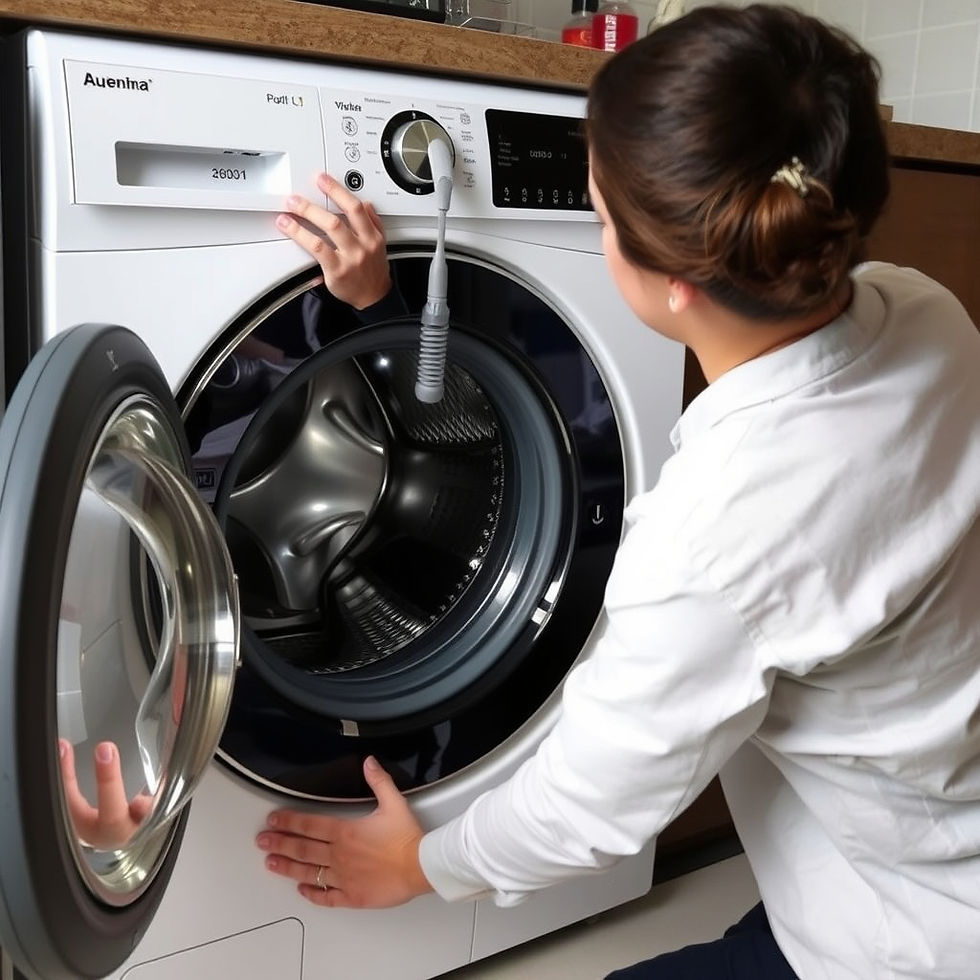
A drum-clean programme is useful, but it does not automatically clean every part of a front load washer. The rubber gasket, detergent dispenser and accessible pump filter require separate attention.
Wet laundry should be removed promptly after each cycle. Wiping the lower gasket fold and leaving the door slightly open can help the interior dry more effectively.
Cleaning intervals vary between washing machine models. The maintenance reminder and appliance manual should take priority over a universal monthly or quarterly schedule.
Vinegar, baking soda, bleach and commercial cleaning products should only be used when the manufacturer permits them. Cleaning chemicals should never be mixed.
Professional deep cleaning may be appropriate when odours, flakes or dark residue return after correct household maintenance, or when contamination sits behind components that cannot be accessed safely.
Persistent drainage problems, leaks, grinding noises and error messages may indicate a repair issue rather than a cleaning problem alone.
Why Does a Front Load Washing Machine Smell?
Front load washing machines usually develop odours when moisture and residue remain inside after a cycle.
The rubber gasket is one of the most common problem areas. Water can settle inside its folds together with hair, lint, tissues, detergent and small objects from pockets.
The lowest section of the seal normally holds the most moisture because water naturally collects there after washing.
The detergent drawer can create another hidden source of odour. Liquid detergent and fabric softener may dry into a sticky coating inside the compartments, removable inserts and cavity behind the drawer.
New detergent then flows over the old buildup during later washes, allowing the residue to become thicker over time.
The pump filter may also collect lint, coins, buttons, hair clips and other debris. When it becomes dirty or partly blocked, drainage may slow down and water can remain inside the appliance for longer.
Using too much detergent can make the situation worse. Front load machines use controlled amounts of water, so excessive detergent may not rinse away fully. Instead, it can leave a film inside the drum, gasket, dispenser and hoses.
Fabric softener can create a similar coating when it is overused.
Frequent short or cold programmes may also allow oily residue and detergent film to remain. These cycles may be suitable for everyday clothing, but they do not replace a maintenance programme designed to clean the washer itself.
Poor ventilation completes the problem. When wet laundry remains inside or the door is closed immediately after every wash, the drum and gasket take longer to dry.
A lasting solution therefore depends on both cleaning and ventilation.
What Are the Signs That a Front Loader Needs Cleaning?
A musty smell inside an empty washing machine is one of the clearest signs that cleaning is overdue.
The same odour may transfer to towels, bedding and clothing even when the correct detergent is used.
Dark marks, slime or grey residue inside the gasket folds indicate that moisture and dirt have remained there.
A sticky detergent drawer, cloudy door glass, black specks on clothing or flakes appearing after a wash can also indicate internal buildup.
Slow drainage, standing water, an unpleasant smell near the lower filter panel or recurring drainage warnings may suggest that the pump filter or drainage route needs attention.
However, these symptoms can also be caused by a failing pump, damaged hose or control-system fault. A machine that continues draining poorly after the accessible filter has been cleaned should be inspected professionally.
When odours return shortly after a careful household clean, residue may remain behind the drum, inside hoses or around other internal components that cannot be reached without dismantling.
The Five-Zone Front Load Washing Machine Cleaning Method
A practical cleaning routine can be divided into five zones: the seal, dispenser, drum, drainage system and drying conditions.
The seal zone covers the complete rubber gasket and its folds, particularly the lower section where water and debris commonly collect.
The dispenser zone includes the detergent drawer, removable inserts, siphon components and accessible cavity behind the drawer.
The drum zone covers the visible drum and the maintenance programme used to loosen residue inside the washing system.
The drainage zone includes the user-accessible pump filter, emergency drain hose and visible drainage connections.
The drying zone focuses on removing laundry promptly, wiping retained water and improving ventilation after each wash.
Cleaning all five zones is more effective than relying on a drum-clean cycle alone.
How Often Should You Clean a Front Load Washing Machine?

There is no single schedule that applies to every washing machine.
The appropriate frequency depends on the model, household usage, type of laundry, detergent habits and the manufacturer’s maintenance instructions.
After each laundry session, remove the clothes promptly and check the lower gasket fold for trapped objects or visible water.
The door and dispenser may be left slightly open when the machine is not in use, provided this is safe for children, pets and the surrounding walkway.
The gasket, door glass, dispenser and visible drum should be inspected regularly. A frequently used household machine may benefit from a quick weekly check, while a lightly used washer may require less frequent attention.
Run the Tub Clean, Drum Clean, Eco Drum Clean or equivalent programme when the washer displays a reminder or at the interval stated in its manual.
Some machines recommend a monthly programme, while others base the reminder on the number of completed washes.
The pump filter should be checked according to the model instructions and whenever drainage becomes slower, water remains inside the drum or a drainage warning appears.
Professional deep cleaning should be considered according to the condition of the washer rather than an automatic six- or twelve-month timetable.
A heavily used machine with recurring residue may require attention sooner. A properly maintained washer that remains fresh and drains normally may not require the same frequency.
What Should You Prepare Before Cleaning?
Check the appliance manual before starting. Confirm which components are intended for household removal and which cleaning products are approved.
Switch off and unplug the washing machine before opening the pump-filter panel, releasing retained water or accessing removable components near internal areas.
Prepare soft cloths, towels, gloves, a shallow tray and a small non-abrasive brush. A soft toothbrush can help reach narrow gasket and dispenser creases.
Avoid knives, screwdrivers, metal scrapers, abrasive pads and stiff brushes. These can puncture the rubber seal, scratch the drum or damage plastic components.
Use one approved cleaning product at a time.
Bleach must never be mixed with vinegar, ammonia, acidic descalers or another cleaning agent because hazardous fumes may be produced.
How Do You Clean the Rubber Door Gasket?
Open the washer door and inspect the complete rubber seal.
Gently pull back each fold without stretching or deforming the material. Pay particular attention to the bottom section, where water and debris are most likely to remain.
Remove coins, clips, tissues, lint and hair by hand. Avoid using sharp tools inside the gasket or its drainage openings.
For light residue, wipe the seal using warm water and a small amount of mild detergent when this is permitted by the manufacturer.
Use a soft brush to clean narrow folds, then wipe the gasket again using a clean damp cloth so detergent is not left on the rubber.
When mould or dark residue is visible, use only a product approved for the washing machine and gasket material.
Follow the product instructions for dilution, contact time, ventilation and rinsing.
Dry the entire gasket after cleaning, especially the lowest fold.
Inspect the seal while working. A gasket that is torn, cracked, distorted or brittle may need replacement rather than repeated treatment with stronger chemicals.
Why Do Black Marks Remain on the Gasket?
Not every dark mark can be removed completely.
Long-standing contamination may permanently discolour the rubber even after the active dirt or mould has been cleaned away.
Inspect the gasket after it has been washed and dried.
If the mark remains but the rubber is smooth, intact and free from odour, it may be cosmetic staining.
If the area is cracked, rough, misshapen, leaking or still producing a strong smell, the gasket may require professional assessment or replacement.
Repeatedly applying stronger chemicals is unlikely to restore damaged rubber and may make the material deteriorate faster.
How Do You Clean the Detergent Dispenser?
Pull the dispenser out slowly and use the release tab where fitted.
Remove inserts and siphon caps only when they are designed to come out. Taking a photograph before disassembly can make correct reinstallation easier.
Soak the removable components in warm water with a small amount of mild detergent.
Allow hardened detergent and fabric-softener residue to soften before brushing the surfaces.
Clean each compartment, corner and channel using a soft brush. Rinse the parts until no visible detergent remains.
Wipe the accessible dispenser cavity using a damp cloth. Avoid pouring water directly into the opening because electrical components may be positioned nearby.
Allow the drawer and inserts to dry before reinstalling them.
Correct detergent dosing will slow future buildup. Using more detergent or softener does not necessarily make laundry cleaner or fresher.
How Do You Run a Drum-Cleaning Cycle?
Make sure the drum is completely empty.
Do not place clothing, towels or cleaning cloths inside during the maintenance programme.
Select the machine’s Tub Clean, Drum Clean, Eco Drum Clean or equivalent setting.
Follow the appliance instructions when deciding whether a cleaning product is required and where it should be placed.
Some maintenance programmes are designed to operate without additional detergent. Others permit a washing machine cleaner approved for the model.
Use the stated amount. Adding extra cleaner can create excessive foam or leave more residue inside the washer.
When the programme has finished, inspect the drum, door glass, gasket and dispenser for loosened particles.
Wipe the accessible surfaces and leave the door and drawer open so that heat and moisture can escape.
Run another rinse only when the appliance or cleaning-product instructions require it.
Can You Use Vinegar, Baking Soda or Bleach?
Vinegar, baking soda and bleach are not automatically suitable for every washing machine.
They should only be used when the manufacturer permits them and explains the correct quantity, compartment and programme.
Vinegar is acidic and may not be suitable for every rubber seal, hose or internal component.
Baking soda may remain in the dispenser or drainage system when too much is used or the powder does not dissolve properly.
Bleach may be permitted for certain models or maintenance programmes, but its required dilution and placement vary.
Bleach should never be combined with vinegar, ammonia, acidic cleaners or another household product.
For routine care, the safest general choice is the washer’s own maintenance programme together with a purpose-made product approved by the manufacturer.
Should Vinegar and Baking Soda Be Used Together?
Combining vinegar and baking soda is not necessary for routine washing machine care.
The two substances react with each other, making the result less predictable than an approved appliance-cleaning method.
More importantly, neither product is suitable for every washing machine.
A manufacturer-approved cleaner and programme provide a clearer and safer default.
How Do You Clean the Drain Pump Filter?
First confirm that the appliance has a user-accessible pump filter.
Review the machine instructions before opening the lower service panel because filter designs differ between models.
Switch off and unplug the washer.
Which Cleaning Mistakes Make Odours Return?
Closing the door immediately after every wash traps damp air inside the machine.
Leaving wet laundry inside for several hours creates the same problem.
Using excessive detergent or fabric softener leaves a coating that holds lint, body oils and dirt.
Cleaning only the visible front edge of the gasket misses the deeper folds where residue collects.
Running only a drum-clean programme overlooks the dispenser, seal and pump filter.
Ignoring slow drainage allows dirty water and debris to remain inside the washer.
Using increasingly harsh products may damage surfaces without correcting the moisture or drainage problem.
Mixing cleaning chemicals is the most serious mistake and should always be avoided.
Why Does the Washer Still Smell After Cleaning?
An odour may remain when residue is hidden beyond the visible drum and gasket.
The dispenser channel, drain hose, pump area or space surrounding the inner drum may still contain contamination.
The washer may also be retaining water because of poor drainage.
Check whether the machine empties fully and whether the accessible filter is clear.
A sewer-like smell may originate from the property’s drainage connection rather than the washing machine itself.
When correct household cleaning does not improve the problem, professional inspection is more useful than repeatedly applying stronger products.
What Do Black or Grey Flakes on Laundry Mean?
Flakes may come from loosened detergent residue, fabric-softener buildup, lint, dirt or deteriorating material inside the washer.
Run the correct maintenance programme and clean the gasket, dispenser and accessible pump filter.
Do not assume that every dark particle is mould.
When flakes continue after several correct cleaning cycles, residue may be sitting around internal surfaces that cannot be accessed safely at home.
Professional inspection can help determine whether the source is contamination or a deteriorating component.
When Is Professional Front Load Washing Machine Cleaning Needed?
Professional cleaning may be appropriate when the washer continues to smell after all accessible areas have been cleaned correctly.
It may also be useful when black residue returns quickly, flakes repeatedly appear on clothing or contamination is visible beyond ordinary reach.
Professional cleaning should not be treated as a replacement for appliance repair.
Slow drainage, standing water, recurring error codes, leaks, grinding noises, electrical tripping and unusual vibration may indicate a mechanical or electrical fault.
A cleaning provider should explain which components will be accessed, what dismantling is included and whether any repair discovered during the appointment requires separate approval.
Does Professional Cleaning Include Full Drum Dismantling?
Not every deep-cleaning service includes complete drum removal.
The amount of dismantling depends on the machine design, contamination level and service package.
Some services focus on the gasket, dispenser, accessible drum area, filter and drainage components.
Deeper contamination may require panels or selected internal sections to be removed.
Before booking, ask which components will be dismantled, how they will be cleaned and what tests will be performed after reassembly.
The quotation should describe the actual scope rather than relying only on the term “deep cleaning.”
How Does Brilliant Miles Clean a Front Load Washing Machine?
Brilliant Miles provides door-to-door washing machine deep cleaning in Singapore, allowing customers to have their appliance cleaned at home without transporting it to a workshop.
The published front-load service focuses on areas where moisture and residue commonly collect, including the rubber gasket, detergent dispenser, pump filter, drum and drainage components.
This is more comprehensive than running an empty cleaning programme alone because the individual problem areas are inspected and treated separately.
The service is intended to address detergent buildup, grime, mould-related residue and unpleasant odours.
Customers should confirm which components will be dismantled for their particular machine and whether any repair work discovered during cleaning will be quoted separately.
What Workmanship Support Does Brilliant Miles Provide?
Brilliant Miles advertises workmanship support for eligible washing machine cleaning concerns.
Because the company’s public website has displayed different coverage periods in separate sections, customers should confirm the current duration, covered issues, exclusions and revisit process in writing before booking.
Workmanship support should also be distinguished from a guarantee that mould or odour will never return.
Detergent use, ventilation, drainage condition and washing habits can all affect whether contamination develops again.
How Should You Prepare for Professional Cleaning?
Remove clothing and loose objects from the drum.
Clear detergent containers, laundry baskets and household items from around the washer so the technician can work safely.
Provide the appliance brand and model number when booking.
Tell the provider whether the machine is positioned beneath a counter, inside cabinetry or below a stacked dryer.
Mention slow drainage, standing water, leaks, recurring error messages, grinding sounds or unusual vibration because these may indicate that repair diagnosis is needed in addition to cleaning.
Customers living in condominiums should confirm contractor registration, parking and service-access arrangements before the appointment.
Ensure that the water tap, electrical socket and drainage connection can be reached safely.
Frequently Asked Questions
How often should a front load washing machine be cleaned in Singapore?
The gasket should be inspected and dried regularly, especially after heavy use.
Run the maintenance programme according to the appliance reminder or manual.
Professional deep cleaning should be based on persistent odour, residue, flakes or inaccessible contamination rather than a fixed six- or twelve-month rule.
Why does a front loader still smell after a drum-clean cycle?
A drum-clean programme may not remove residue inside the gasket folds, dispenser cavity, pump filter or drainage route.
Each accessible area should be cleaned separately.
Persistent odour may indicate deeper contamination, retained water or a drainage fault.
Can bleach and vinegar be used in a washing machine?
They must never be used together.
Bleach can react dangerously with vinegar and other acidic products.
Either product should only be used when the appliance manufacturer permits it and gives clear instructions.
Can baking soda remove washing machine odours?
Baking soda may be permitted for certain appliances, but it is not a universal solution.
Excess powder can remain inside the dispenser or drainage system.
A manufacturer-approved cleaner and maintenance programme are safer general options.
Can permanent black stains on the gasket be removed?
Cleaning may remove surface contamination without reversing permanent discolouration.
A gasket that is cracked, distorted, brittle or persistently smelly may need replacement.
How often should the pump filter be cleaned?
Follow the maintenance instructions for the specific model.
Inspect it sooner when the machine drains slowly, retains water or displays a drainage warning.
Can professional cleaning fix slow drainage?
Cleaning may improve drainage when the problem is caused by accessible lint or debris.
Persistent drainage problems may involve the pump, internal hose, control system or another component requiring repair.
Does professional deep cleaning include complete drum removal?
Not necessarily.
The dismantling included depends on the washing machine and selected service.
Customers should confirm exactly which components will be removed before booking.
How long does professional front load washing machine cleaning take?
The duration depends on the model, installation, level of contamination and dismantling required.
The provider should confirm the expected appointment time after receiving the appliance details.
What does Brilliant Miles’ front load cleaning service include?
Brilliant Miles’ service focuses on the gasket, detergent dispenser, pump filter, drum and drainage areas where moisture and residue commonly accumulate.
Customers should confirm the precise dismantling, testing and follow-up included for their appliance.
Conclusion
Front load washing machine cleaning works best as a routine rather than a one-time response to a bad smell.
Remove wet laundry promptly, wipe the gasket, keep the washer ventilated and use the correct amount of detergent after every wash.
Inspect the seal and dispenser regularly. Run the manufacturer-approved maintenance programme when requested and clean the accessible pump filter according to the appliance instructions.
Use cleaning products cautiously and never mix bleach with vinegar, ammonia, acidic products or other cleaners.
Stop when the work requires forced dismantling, electrical access or removal of a stuck component.
Persistent odours, flakes, leaks, poor drainage and unusual noises may indicate that professional cleaning or repair diagnosis is needed.
Brilliant Miles provides doorstep front load washing machine deep cleaning in Singapore, covering the areas most likely to retain moisture, detergent residue and debris.
Consistent maintenance after cleaning helps the washer dry properly, reduces the return of residue and gives every load a fresher environment.


Comments